Wizard’s First Rule


A young woodsman called Richard Cypher (hint hint) is out in the woods, pondering the murder of his father, when he sees a beautiful woman (is there any other kind?) being stalked by four men. He intervenes, and rescues her from death. From this rather quick beginning, Terry Goodkind has spun the tale of “Wizard’s First Rule.” “When writing a short story,” Chekhov supposedly said, “Finish it, then chop the first three paragraphs.” We get dropped into the action so rapidly in “Wizard’s First Rule”, that one suspects Goodkind may have known the quote.

WFR (I’m a little too lazy to be typing the whole thing every time I refer to it), is, at first blush, a groaning retelling of Tolkien.  When you think about it, it has all the trappings: innocent youth going on quest to save world – a sylvan northern place, of course – from evil bad guy, aided by friends and (of course), old wizard.  It’s a bildungsroman from start to finish – though finish may be the wrong word, since this book is the first one of eleven equally weighty tomes. Why me God?, I groaned as I saw the stat: can these things not be afflicted with the Multiplicate Virus?  Was I gonna have to plow through millions of words in order to grasp what amounts to an introduction?

And Terry Goodkind, who published this work in 1997, doesn’t make the going easy either.  After a that rather lurching beginning that drops us so disconcertingly into the main events, he tediously sets up character and world and scene in what consists of half of a 900 page novel.  It’s like the journey to Rivendell took twice as long. He mixes elements of Middle Earth, the Quest, the numinous object and modern pop culture in a medieval setting in often intriguing ways. It’s quite a read.

This version of Middle Earth is a land divided into three spheres: Westland, without magic, Midland with it, and the more easterly realm of D’Hara, also with magic. The three lands are separated by a now-failing boundary which once prevented passage between them, set there by wizards long ago, but still within memory of the living. The ruler of D’Hara, an evil emperor (aren’t they all?) called Darth Vader – sorry, Darken Rahl –  is taking over Midland and possesses magic greater than even that wielded by the great wizards of old.  In a nutshell, it becomes Richard’s task to stop him, since Darken Rahl is bent not only on world domination, but actual world destruction.  One wonders what he’ll do with the wasteland he ends up with.

WFR is a self-contained story – much to my relief – and to some extent suffers from what I term “First Novel Syndrome” – which is that suspicious effluvium one finds in some first novels: occasional loose plotting, language that doesn’t ring true, motivations and interactions and events that occur just a little too conveniently. In this instance, these matters exist and can be spotted – the sudden appearance of Scarlet is a particularly egregious (and irritating)  example of the phenomenon in action – but are fortunately not always that obvious.  It’s sad that a novel this ambitious and this taut needs to resort to clumsy plot devices to get our boy out of a corner Goodkind has written him into.

I can go on about the world Goodkind has created, the characters he populated it with, and the backstory and history with which he fleshes things out, even the long narrative and intricate plot: but that would be pointless. In a series of this kind the crucial questions are always the same: is the world a unique one, populating our mental landscape with new images and distinctive characters? and are the old legends of our time woven in new and spellbinding ways?

And so I must be honest: once one gets past the issues I mention, slogs on past the halfway point when all is made clear (more or less), when one finally has a good grasp of the issues, the history and the culture of the world…then things really do take off.  And better yet, Goodkind clearly had his multiplicated stretch-limo of a series in mind from the beginning, since it is obvious he is setting things up for future novels (full disclosure: in researching WFR, I peeked at summaries of what comes later), and that gives this book a solid historical and cultural grounding and a richness and depth not always found in fantasy wannabees and pretenders to Tolkien’s throne. Stilted and choppy dialogue aside – too many conversations take place simply to inform the reader – the core relationships between Richard, Zed and Kahlan are solid (if straightforward), and required. And I have to admit: Goodkind enjoys springing surprises on us, he changes direction on a dime, and yet his plot makes good use of all previously supplied information – he does not cheat.

The fantasy books that stick with us are those that have a strong storyline, do not bore and have both environments and characters we care about. Martin’s Song of Ice and Fire, the worlds of Fionavar, Middle Earth, Earthsea, Discworld and Donaldson’s Land are all places that have colonized our imaginations and enriched our reading with their magic and heroic tales. Now here is the world of WFR – imperfect, intriguing, interesting and powerful. Not all will be enthused by having to read eleven books, and like Jordan’s epos The Wheel of Time, it may fail at the back stretch: but with this one work, Goodkind has created an entry that, if it avoids the pitfalls all too common inn the genre, may rise to share a table with the best of them.

I’d say that for a book I started out disliking, that’s no faint praise.

 Posted by at 2:39 pm

  17 Responses to “Wizard’s First Rule”

  1. Let me expose me ignorance (is that what you call it?). My forays into fantasy have been limited to a couple dozen Dragonlance book in my teens (and a few one-off re-reads of these since). I have never read LotR. I know…I know…blasphemy…ignoramus…etc etc.

    I have mentioned hoping someone would pick a book like this for a while now.

    Robert told me he is already closing in on the 100 page mark, and quite enjoying it. Though I also sighed when I saw 836 pages to read…the first 10 pages have shown me that this will be a breeze.

    Good pick, Scott. Glad to go down a new path.

    Who do some of you recommend as good fantasy authors? (Guy Gavriel Kay has already been passed on to me).

    *Robert…fantasy does not mean those letters written in to the magazines behind the counter in the convenience stores.

  2. Tolkien is almost a cheat, since he is so well known, but of course he is worth it. My issue these days with fantasy is they never come in single spies any longer, but in multiplicated tomes. So authors like Robert Jordan and George R. R. Martin, who started off so well, now simply irritate with their plodding insistence on 10+ books that simply drag and never go anywhere

    All the above aside, good authors and works are:

    * Pullman’s “Dark Materials” trilogy (the film “Golden Compass” was so-so adapatation of the first book; hey, Hippie…God is dead in this one!!!);
    * LeGuin’s Earthsea books (only the first need be read);
    * Kaye, of course, anything he’s done is wonderful;
    * Eddings’s Belgariad (in “Other Books” reviews) is worth a read;
    * do not ignore pulp fiction sword&sorcery like Conan from Robert E. Howard;
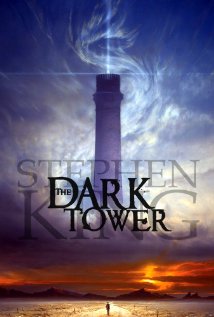
    * The Gunslinger needs no further introduction
    * and if you can get past the rape scene on page 47, and a vocabulary that makes me seem mentally challenged, then “The Chronicles of Thomas Covenant” is the series for you.

  3. @Curt Curt, further to Lance’s comments…do read Tolkien sooner rather than later. The Hobbit provides background but isn’t wholly critical. You can get by on Fellowship / Two Towers / Return of the King and end it there. This is the standard by which other fantasy novels are judged.

    Tolkien’s creativity opened up the doors for many, many authors; talented or otherwise. A quick stroll through any bookstore will show you that this is a big, money-making genre.

    There are many rewarding reads to be found here. Fantasy is just that – in the hands of a skilled author this genre can go anywhere. The best stories can bring you to experience ideas, thoughts, conflicts, tension, and emotions like nothing you could ever have imagined on your own.

    Too many of these books were written using the “Chinese Combo Meal” method – choose a bit from column A, a bit from column B, etc…in order to hit upon a winning combination For example, take most of the elements of Star Wars and repaint ‘em “olde tyme”, add in the cast of creatures from the Lord of the Rings, and you have yourself Eragon.

    Sometimes this works out and you can get an entertaining read. If this is all that you’re looking for then have at it.

    However…while one-off reads of derivative fiction may be entertaining, if the original source was worth duplicating at all chances are that it had more to offer than a thinly-veiled copycat. Tolkien is cask strength, not chill-filtered, no caramel added.

    At its best the Fantasy genre can provide an unimaginable, exhilirating escape from reality. Tolkien delivers both a great fantasy fiction experience AND provides you with the background you need to avoid rehashed duds.

  4. @Curt Quick clarification – I didn’t mean to suggest that Tolkien holds a monopoly on vaguely “medieval” settings, little people, elves, etc. This setting obviously has broad appeal and other authors have had great success in crafting DIFFERENT stories in similar worlds.

    It isn’t fair to paint all books featuring “Middle Earth-ish” settings as being derivative of Tolkien…I was picking on those cases where specific plot devices are re-used without any creative twist whatsoever.

    Specifically on the book that we’re reading…yes, Goodkind’s book does hold some aesthetic similarities to Tolkien. However, having read it (and rereading now) I believe that there are many things about this cast of characters and plotline that differentiate Wizard’s First Rule from others in the genre. Keep going – I really think that you’re going to enjoy this!

  5. Clint…how do the Weis/Hickman books stack up?

  6. @Curt
    Goodkind spends a good bit of time developing the thought patterns & motiviation of his characters, which I think lends credibility to their actions. It’s an interesting style…throughout the book I find that Richard’s “voice” coaches the reader to start reading between the lines.

    In comparison, Weis & Hickman are more action-oriented and the writing style is much more direct. There’s a larger cast of characters, most of whom have a few key characteristics. This isn’t to say that the characters are shallow (Raistlin, for instance…), it’s just that character development isn’t really intended in these books. Unlike Wizard’s First Rule, everything is very literal and laid out for the reader.

    It’s truly just a matter of preference – both styles have their place.

  7. Clint if you can write this incisively and at such length on a book, what on earth is holding up your &*%&(^%&^ bio?

  8. And…why aren’t you scribbling mad reviews?

  9. Sorry for the holdup Lance, but I really want to have washboard abs in my bio photo.

    Truth be told, I’m not very good at writing about myself. Writer’s block, or crippling self-consciousness? You decide!

    Curt, do you mean angry mad, or prolific mad?

  10. I went on my medievalist fantasy kick when the dragonlance series became popular as well. since then I have not read that many books in this genre, however when i do i find that they are enjoyable for the most part. I also agree that they tend to be slightly different rehashes of the lotr. most of the fantasy stuff I have read was published by TOR.

  11. He he… girls is going to write a comment!!
    I started this series in about 2000 and I’m still waiting for the last book so I can start over and have a complete ending!!
    Pullman’s “Dark Materials” and LeGuin’s A wizard of Earthsea (1st one) are classified as children’s books! But are awesome…I have if anyone want to borrow they are quick reads.
    I would also mention other authors that I like:
    The Fionavar Tapestry by Guy Gavriel Kay
    Terry Brooks the Shannara series.
    R.A. Salvatore

    Guy is a very in depth writer, with twist and turn and hidden meanings.

    While Brooks and R.A. Salvatore Are more action based and direct but with more of a charter development especially Drizzt. It really goes to what type of escape you’re looking for as to what type you read as these ones there is not too much think about what is going on it just takes you there like a movie.
    While there are hugely indepth books that make you guess and wonder where each turn is taking you!

    P.S Curt I have all on Tolkien’s auto books unabridged if you want to listen instead of read… it is a little better that way!

  12. Heya, Keri. Welcome aboard, senorita.

    Lance gave me a copy of The Fionavar Tapestry. Have yet to venture into it. Will do soon enough (I know, I know…been saying that for a couple months now).

    I’ll also make it through Tolkien. Feel like an ignoramus not having done so already. Appreciate the offer of audio, but I’m a book guy. Thanks anyway.

    You’ll have to drop a few lines when you finish “Atlas” and let us know what you think.

    You should tell some of the other gals to drop in from time to time.

  13. Scott…just finished this book. Clint and I were chatting last night. He has read the second one, but no further.

    Is it worth reading on in this series?

    Thanks for picking something outside of what we’ve covered so far. Now if only Lance would make good on his threat to throw some 1930s pulp fiction at us…

    Clint…funny thing. Look at Keri’s post above. She mentions the same series (LeGuin) that Jay mentioned last night. Saying essentially the same thing.

  14. WFR review is up.

  15. I am now halfway through the 7th book, It continues to be an interesting read. Might have to take a break from it after this though. Might have to go with some Calvin and Hobbes.

  16. Nope. Straight on to Dostoevsky for you.

 Leave a Reply

(required)

(required)

You may use these HTML tags and attributes: <a href="" title=""> <abbr title=""> <acronym title=""> <b> <blockquote cite=""> <cite> <code> <del datetime=""> <em> <i> <q cite=""> <strike> <strong>